Heavy strings and human ritual: Raphael Weinroth-Browne at The Broom Factory
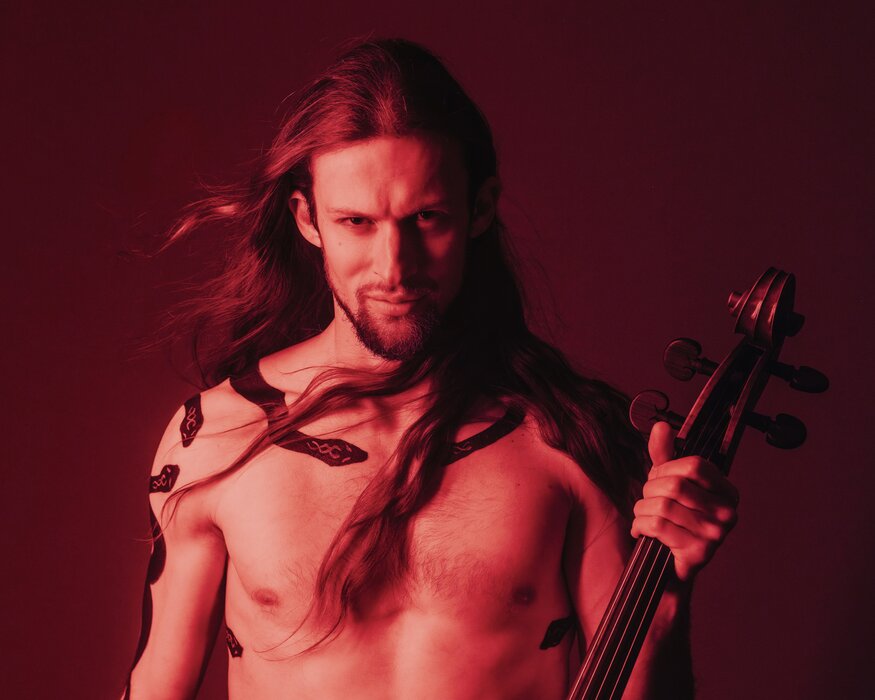
On January 23, KPP Concerts will host a singular force in contemporary music: Raphael Weinroth-Browne at The Broom Factory in Kingston.
Weinroth-Browne is a cellist who has spent his career dismantling expectations of what the instrument and a solo performer can be. Known for fusing classical technique with the weight of metal, the atmosphere of ambient music, and the emotional sweep of cinematic composition, his work feels less like a concert and more like a ritual: immersive, physical, and deeply human.
Ahead of his upcoming performance, Weinroth-Browne spoke about his relationship with the cello, the emotional worlds he builds through sound, and why live performance remains sacred in an increasingly digital age.
Q: You’re known for pushing the cello far beyond its traditional role, blending classical technique with heavy, experimental sound. When did you first realize this instrument could become such a powerful extension of your voice?
I grew up composing music and playing a variety of instruments, including guitar, bass, drums, and keys, but it wasn’t until my late teens and early twenties that I began to use the cello as a vehicle to synthesize all of my diverse influences and express a wide range of musical approaches and instrumental sounds. At the time, I was pursuing my undergraduate degree in cello at the University of Ottawa while playing in bands in the evenings and becoming an active session musician - needless to say, the cello completely took over my life during these years. On top of studying classical music, I was working with extreme metal bands, eclectic singer songwriters, Indian Bollywood bands, and spoken word poets, and had to find the right sound and approach for each musical situation, whether that meant emulating a guitar, synth, or violin, or perhaps doing something more percussive.
In my old cello-voice duo The Visit, I had to create the impression of a full-fledged ensemble (which I initially did without using a looper) as the only instrumentalist in the band. Writing music for this project opened up a whole new world of creative possibilities that I continue to draw from in my current solo project.
While I’m definitely a maximalist composer, the limitation of having to produce every sound with only the cello has defined my career and shown me the seemingly limitless potential of the instrument. I still feel that I have so much yet to say with it.
Q: Your work often feels immersive and emotionally charged, almost like a film score unfolding in real time. When you’re creating or performing, what kind of emotional space are you hoping to draw people into?
The act of creation is incredibly precious and spiritual for me - for me it’s the moment of reaching past the veil into another, non-physical realm and bringing back something from that unseen world that others can experience and understand. It’s like being able to project your dreams onto a screen so that people can watch them like a movie.
Both live and on record, I intend to conjure an immersive atmosphere that listeners can inhabit. I hope that through the music they feel transported into deeply emotional, wordless states - meditative, liminal spaces where they can commune with the sound on a deeply personal level, as though it was being played just for them.
The music on my latest Lifeblood in particular is dark, but also cathartic, uplifting, and empowering. There is a spirituality and commitment that I bring to my live performances; I feel that I am a servant to the music and am fully devoted to communicating it as eloquently as possible in performance. I hope that this all-in attitude, combined with the transportive, evocative music from Lifeblood, inspires listeners to feel more deeply and live more fully, to remind all of us of our collective humanity as we leave the ritual of the concert and re-emerge into everyday life.
Q: You’ve moved fluidly between genres, from metal and ambient worlds to cinematic composition. How do those different musical environments influence the way you approach your own writing?
Each of these musical environments requires a different mindset and range of techniques - it’s as much about the attitude I bring to the music as the different paintbrushes and colours needed for the job. These diverse experiences give me a range of approaches to draw on, which in turn lead to more varied and dynamic compositions.
During the creative process, I pursue my instincts in the moment and allow them to lead me naturally to ideas that feel compelling. Even in the early stages of a composition, I tend to envision multi-movement pieces with gradual builds and multiple contrasting sections, akin to classical works or prog epics.
I draw on different musical styles and composition/playing techniques I’ve explored in the past to flesh out arrangements once the initial melodies, chords, and riffs are in place. I like to think of this process as decorating or seasoning for the music. For instance, I might want to make a section feel ethereal, haunting, or creepy by adding slow glissandi (slides), glassy harmonics, or abrasive swells that imitate distortion and feedback (these sounds are prominently featured on the tracks Lifeblood, Possession, and Ophidian). These are all techniques I use frequently both on soundtracks and in a metal context. I try to imagine a fully developed musical texture and then get the cello to “act out” all the parts, so to speak. That often means portraying different characters or personalities for a given solo, riff, or repeating idea to give the impression of different players performing together rather than just an army of me.
Q: The live setting plays a huge role in how your music is experienced. What does sharing a room with an audience give you that studio work can’t replicate?
A live performance is a far more direct window into the soul of an artist and their creative world than a recording - it is a journey that can never be repeated, a ritual in which both performer and listener are intertwined. I feel that when people attend my live shows, they are able to see me clearly. When I play music, particularly my own, I feel truly myself and can be completely vulnerable.
My music is difficult to describe and classify, particularly to those less versed in niche subgenres such as progressive metal and modern classical, or those unfamiliar with artists like Apocalyptica and Zoe Keating. Even for the most adventurous metalheads, it can be a tough sell on paper. However, regardless of their musical proclivities, when people attend my shows, they get it. There’s a physicality and presence that defines my live shows - a raw, visceral energy that is a far cry from classical music and perhaps more in tune with the modern era. I think the visual and theatrical aspect of being a one-man cello show really translates for people as it’s both intimate and intense. Audience members have frequently remarked on my very passionate way of playing and how it reflects my deep devotion and commitment to music. I believe that witnessing this allows them to connect much more deeply with both the art and the artist behind it.
To me, performance is about giving. When I play live, I want to give everything - it’s an offering, an opportunity for human beings to commune in an irreplaceable, unrepeatable moment. In today’s world of heavily edited and processed recordings and AI-generated music, the live stage is the last vestige of raw authenticity and age-old truth, a human ritual that is more precious and valuable than ever.
Q: For someone encountering your music for the first time at a show, what do you hope lingers with them long after the final note fades?
A reminder of the incredible beauty and fragility of being alive.
As Weinroth-Browne brings his solo performance to The Broom Factory, Friday, January 23, audiences can expect more than a genre-defying concert, they’ll be stepping into a shared moment of intensity, vulnerability, and communion. It’s a rare chance to experience an artist who treats sound as both a physical force and a spiritual language, reminding us that live music, at its best, is still one of the most powerful ways we connect to one another. Details and tickets here.
Posted: Jan 12, 2026